
 ZAR (R)
 GBP (£)
 USD ($)
What is ashy skin, and how do you fix it?
The short version: ashy skin is what happens when your skin barrier loses lipids faster than it rebuilds them. Dead surface cells dehydrate, sit flat instead of reflecting light, and scatter it into a grey or dull cast. It's a barrier problem, not a hydration problem — which is why lotion alone never quite fixes it.
The solution is to replace the lipids and then seal them in. Water on its own evaporates straight back out.
Why "ashy" isn't just a word for dry
Ashiness describes something specific: a grey or greyish-white cast on the surface of the skin, most visible on the shins, elbows, knees, forearms and around the mouth.
Here's the mechanism most articles skip. Your skin's outermost layer is made of flattened dead cells called corneocytes, held together by a lipid matrix of ceramides, cholesterol and fatty acids. When that matrix is intact, the surface is smooth and reflects light evenly. When it depletes, the corneocytes dry out, curl at the edges and lift.
Light hitting a lifted, uneven surface scatters instead of reflecting. That scatter is what reads as grey.
This is more visible on deeper skin tones for a straightforward optical reason: the contrast between the pale, light-scattering dead cell layer and the pigmented skin beneath it is greater. The same degree of barrier damage that looks like mild dryness on pale skin looks distinctly ashy on melanin-rich skin.
It's the same condition. It just shows up more.
What causes it
- Low humidity. Cold, dry air pulls water out of the skin faster than it can be replaced. This is why ashiness spikes in winter and in air-conditioned buildings.
- Hot water. Hot showers strip the lipid matrix directly. The tightness afterwards is the barrier reporting damage.
- Harsh surfactants. Soap-based body washes remove sebum along with dirt.
- Over-exfoliating. Scrubbing away the dead layer without replacing the lipids underneath makes ashiness worse, not better. This is the most common mistake.
- Genuinely dry skin types. Some skin produces less sebum. That's not a flaw to correct, it's a baseline to work with.
Why moisturiser alone doesn't fix it
Most body lotions are mainly water with an emulsifier and a little oil. They feel good on application and they deliver water to the surface. Then the water evaporates, and if there's no lipid layer to hold it, you're back where you started within hours.
That cycle — moisturise, feel better, ashy again by evening — is the signature of treating the symptom rather than the barrier.
What actually resolves it is a two-part approach: replace the lipids the barrier is missing, then seal the whole thing so water can't escape.
How to fix ashy skin
1. Change the water temperature. Warm, not hot. This is free and it makes more difference than any product.
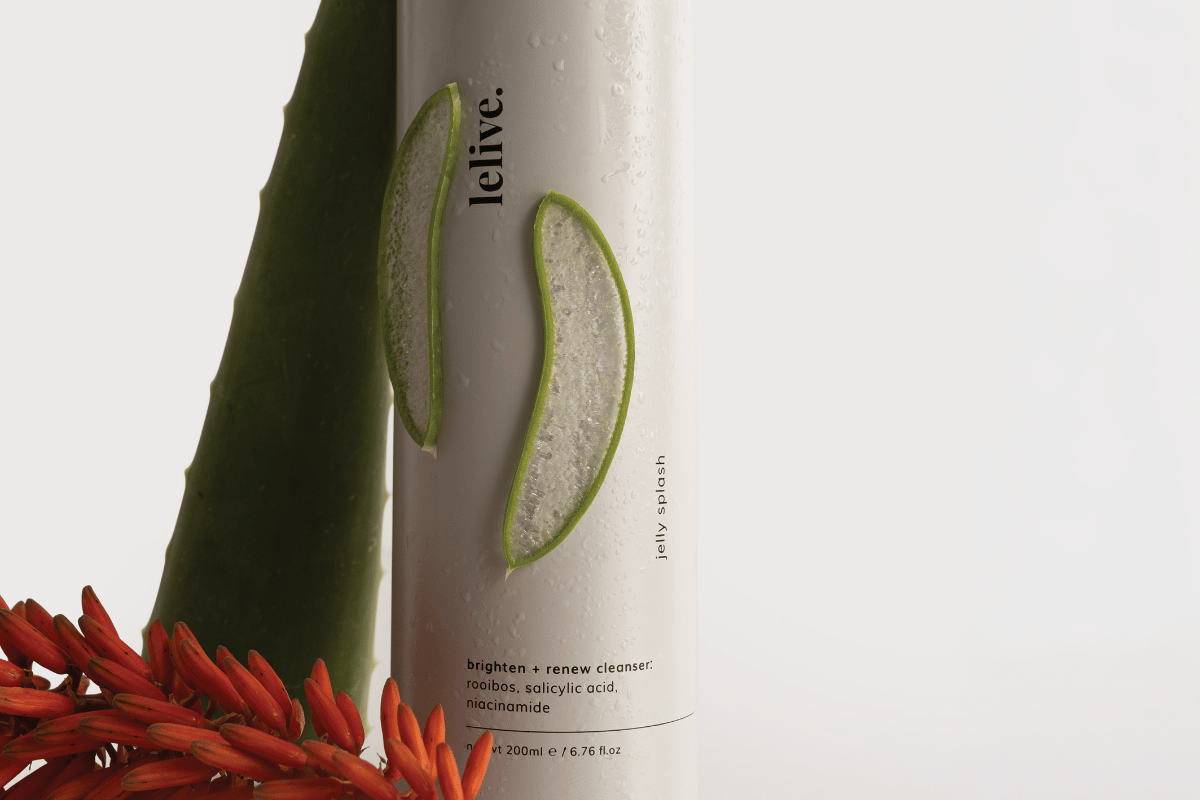
2. Switch to a non-stripping cleanser. Clean Slate cleans without soap-based surfactants stripping the lipid layer.
3. Exfoliate strategically, not aggressively. Once or twice a week is enough. Good to Glow (R395) uses AHA and PHA with jojoba beads — chemical exfoliation loosens the bonds between dead cells rather than sanding them off. Always follow with oil.
4. Replace the lipids while skin is damp. Oil La La carries vitamin C, bakuchiol and moringa. Moringa oil absorbs quickly enough that it doesn't sit as a film — which matters, because the reason people abandon body oils is the greasy feeling, not the results. Apply within three minutes of towelling off, while the surface still holds water.
5. Seal it. African Butter over the top on the worst areas — shins, elbows, knees. Shea butter provides the occlusive layer, niacinamide signals your skin to produce more of its own ceramides, and hyaluronic acid holds water in place.
That last point is the one worth understanding. Occlusives and oils fix today. Niacinamide changes what your barrier does over the next eight weeks.
For the face
The same mechanism, different products. Winter tightness and dullness on the face is the same lipid depletion.
African Gold replaces barrier lipids with baobab oil while bakuchiol and peptides drive renewal underneath. The Du-Pont seals it, and carries niacinamide, squalane and shea butter for the longer-term barrier work.
Two to three drops of oil on damp skin, cream over the top. Oil then cream, not the reverse — cream first blocks the oil from getting anywhere.
How long it takes
Surface smoothness improves within days once you stop stripping the barrier and start replacing lipids. Actual barrier repair runs on your skin's natural turnover cycle, which takes roughly four to six weeks. Ceramide production changes take eight to twelve.
The short-term relief is real, but if you stop at that stage, the ashiness returns every time the weather does.
Comments