
 ZAR (R)
 GBP (£)
 USD ($)
5 Best Cleansers for Dry Skin South Africa
If you have dry skin, the wrong cleanser is the fastest way to make things worse. Most face washes — even ones marketed as "gentle" — contain sulfates or harsh surfactants that strip the skin's natural oils, leaving you tight, flaky, and more dehydrated than when you started.
A good cleanser for dry skin should do two things: remove what needs to go (makeup, SPF, pollution, excess sebum) without disrupting your moisture barrier. That's a harder balance to strike than it sounds, which is why so many dry skin types end up cycling through product after product without finding something that actually works.
This guide covers five cleansers that genuinely deliver — tested on South African skin, across dry and combination-dry types, in both Gauteng winters and coastal humidity.
What to Look for in a Cleanser for Dry Skin
Before getting into specific products, understanding what to look for (and what to avoid) makes everything easier.
Ingredients that work for dry skin: hyaluronic acid, glycerin, ceramides, plant oils (coconut, marula, jojoba), and gentle enzymatic exfoliants that don't require scrubbing. These either attract moisture, lock it in, or strengthen the barrier that keeps it there.
Ingredients to avoid: sodium lauryl sulfate (SLS), sodium laureth sulfate (SLES), alcohol denat, synthetic fragrance, and menthol. All of these can disrupt the skin's natural pH and deplete oils that dry skin is already lacking.
pH matters more than most people realise. Healthy skin sits between pH 4.5 and 5.5. Many traditional soaps and face washes sit well above this, which disrupts the acid mantle — the protective layer that keeps bacteria out and moisture in. Look for cleansers specifically formulated to be pH-balanced.
The 5 Best Cleansers for Dry Skin in South Africa
1. Best First Cleanse: lelive cleaner colada | nourish + remove oil cleanser
R349 | Available at leliveafrica.com
If you're not double cleansing, this is the product that will make you start. Cleaner Colada is an oil-based cleanser — the first step in a two-step cleansing routine — that dissolves makeup, SPF, and oil-based impurities that water-based cleansers simply can't break down.
What makes it stand out is the ingredient combination: refined coconut oil and mongongo oil (a rich African botanical) do the cleansing work, while pineapple enzyme adds mild enzymatic exfoliation without any scrubbing. The result is skin that's genuinely clean — not stripped — with a noticeably silky finish.
It was featured by British Vogue (April 2025) as one of the top cleansers, and the formula is notably non-comedogenic: safe for oily and acne-prone skin as well as dry, and pregnancy-safe. Apply to dry skin, massage to dissolve impurities, add a little water to emulsify, then rinse. Follow immediately with a water-based cleanser (like Jelly Splash below) for a complete double cleanse.
Best for: removing makeup and SPF, first step in double cleansing, all skin types including sensitive.
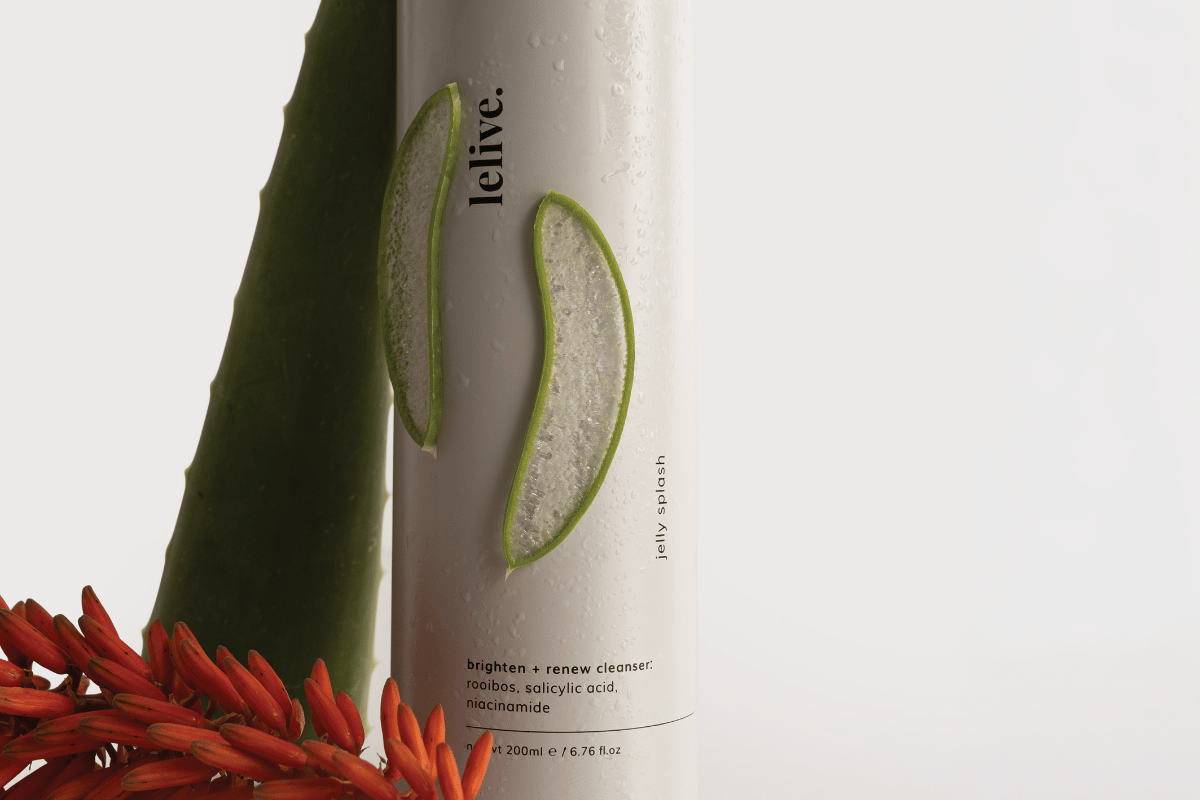
2. Best Second Cleanse: lelive jelly splash | brighten + renew cleanser
R349 | Available at leliveafrica.com
Jelly Splash is the water-based second step — the cleanser that actually addresses the skin itself once Cleaner Colada has removed the surface layer. It uses a low-dose combination of AHA and BHA (glycolic and salicylic acid) to gently resurface and clear congestion, plus niacinamide to calm and even tone.
For dry skin, what makes this formula work is what it doesn't do: it doesn't foam aggressively, doesn't strip, and doesn't leave that tight, squeaky-clean feeling that's actually a warning sign of a disrupted barrier. The jelly texture rinses cleanly and leaves skin prepped and balanced.
Over 170 five-star reviews from South African customers — particularly popular with those dealing with dry skin that also has post-breakout marks or uneven tone, since the AHA component helps accelerate cell turnover without the irritation risk of stronger exfoliants.
Best for: dry skin with congestion, texture, or dark marks; daily use as standalone cleanser or second step in double cleanse.
3. Best for Very Dry and Atopic Skin: Bioderma Atoderm Intensive Gel Moussant
~R350–R450 | Available at Clicks, Dis-Chem, pharmacies
Bioderma's Atoderm Intensive range is designed specifically for very dry, sensitised, and atopic skin — and this cleanser is one of the most barrier-respectful formulas available at pharmacy level. Developed in France by dermatologists, it uses a soap-free, sulfate-free surfactant system that removes impurities without disrupting the lipid layer that dry skin struggles to maintain.
The formula actively limits transepidermal water loss during and after cleansing — a clinically meaningful difference for skin that dries out quickly. It's tested on eczema-prone and atopic skin, fragrance-free, and a small amount goes a long way.
Best for: very dry, atopic, or eczema-prone skin; anyone whose skin reacts to most cleansers; winter routines when the barrier is most compromised.
4. Best Pharmacy Option: La Roche-Posay Toleriane Hydrating Gentle Face Wash
~R350–R450 | Available at Clicks, Dis-Chem, pharmacies
La Roche-Posay's Toleriane range is designed specifically for compromised and sensitive skin, and this face wash delivers on that brief. The prebiotic formula supports the skin microbiome while removing impurities with a surfactant system that's notably mild even by dermatological standards.
The niacinamide content helps with redness and barrier function, and the formula is tested on eczema-prone and post-procedure skin — a useful indicator of how non-irritating the formulation is. It's the cleanser most commonly recommended after laser or chemical peel.
Best for: sensitive or reactive dry skin, rosacea, eczema-prone, post-procedure care.
5. Best Balm Cleanser: The Inkey List Oat Cleansing Balm
~R250–R350 | Available online, ships to SA
Balm cleansers are underused in South African routines — particularly for dry skin — because they offer the most gentle cleansing method possible. This one uses colloidal oatmeal as its hero ingredient: one of the most evidence-backed soothing actives for dry, irritated skin.
It melts on contact, dissolves impurities, and rinses off without the residue some balm cleansers leave behind. No fragrance, no sulfates, minimal ingredient list. Particularly good in winter months when skin is most dehydrated and reactive.
Best for: very dry or flaky skin, winter routines, those sensitive to all surfactants.
How to Cleanse Properly When You Have Dry Skin
Getting the cleanser right is half the job. Getting the method right is the other half.
Use lukewarm water, not hot. Hot water disrupts the lipid layer and worsens dry skin significantly. Lukewarm or cool water is always better.
Apply with gentle pressure. Circular motions with fingertips — no scrubbing, no face cloths, no cleansing brushes unless you're using the softest option available.
Rinse thoroughly. Leftover cleanser residue causes irritation and congestion. Take an extra ten seconds to make sure everything is off.
Pat dry, don't rub. Use a clean, soft cloth and press gently. Rubbing removes moisture and can trigger irritation.
Double cleanse in the evening if you wear SPF or makeup. One water-based cleanser cannot fully remove an oil-based SPF. Start with Cleaner Colada, follow with Jelly Splash.
FAQs: Cleansers for Dry Skin
What is the best cleanser for dry skin in South Africa?
For dry skin in South Africa, look for a cleanser that's sulfate-free, pH-balanced, and formulated with hydrating actives like ceramides, glycerin, or plant oils. lelive's Jelly Splash is one of the most effective locally-made options — it cleanses without stripping and adds gentle exfoliation that helps with texture and uneven tone. Pair with Cleaner Colada as a first cleanse if you wear makeup or SPF.
Should I use a different cleanser in the morning and evening?
For dry skin, yes. In the evening, double cleansing (oil cleanser first, water-based second) thoroughly removes SPF and makeup. In the morning, a single gentle water-based cleanse — or even just rinsing with water — is usually enough.
Can dry skin use a foaming cleanser?
Most foaming cleansers use sulfates to generate lather, which tends to strip oils that dry skin needs. If your skin consistently feels tight after cleansing, the cleanser is likely the problem. Gel, balm, oil, or cream textures are generally better suited to dry skin than traditional foams.
Is oil cleansing good for dry skin?
Yes — oil cleansers are particularly well-suited to dry skin because they dissolve impurities without disrupting the moisture barrier. Non-comedogenic oils (like refined coconut, jojoba, or mongongo) rinse cleanly and won't clog pores.
How often should dry skin be cleansed?
Twice daily is the standard recommendation. If your skin is very sensitive, a water-only rinse in the morning with a full cleanse in the evening is a gentler approach that still keeps skin clear.
Conclusion
The right cleanser can change your entire routine. For dry skin, that means finding something that removes impurities without removing the oils and moisture your skin needs to stay balanced and comfortable.
The five cleansers above cover different textures and skin concerns — from the double-cleanse duo of Cleaner Colada and Jelly Splash for South African skin, to the dermatologist-developed Bioderma and La Roche-Posay options. Start with one, give it four to six weeks of consistent use, and build from there.
This article was written by the lelive team. Jelly Splash and Cleaner Colada are available at leliveafrica.com.

Comments