
 ZAR (R)
 GBP (£)
 USD ($)
Can you use niacinamide with vitamin C or retinol?
The short version: yes to both. Niacinamide layers safely with vitamin C, retinol and bakuchiol. The "never mix them" rule comes from a 1960s laboratory study that used raw niacin under heat — conditions that don't exist in a modern formula or on your face.
That's the answer. Here's the reasoning, because the myth is stubborn enough that it's worth understanding why it's wrong.
What is niacinamide?
Niacinamide is vitamin B3, and in skin it works as a regulator rather than a treatment. It does three things at once:
- It builds ceramides. Niacinamide signals your skin to produce more of the lipids that hold your barrier together, which is what stops water escaping.
- It interrupts pigment transfer. Melanin is produced deep in the skin and then shuttled up to surface cells. Niacinamide slows that handoff, so dark marks fade instead of settling.
- It regulates sebum. Less erratic oil production means pores read smaller and congestion clears.
Barrier, pigment, oil. One bioactive, three mechanisms — which is exactly why it appears in so many formulas, and why the layering question comes up so often.
Where the "don't mix" myth came from
The concern traces back to studies from the 1960s showing that niacinamide and ascorbic acid can react to form niacin — a compound that causes temporary flushing.
Two things about that. First, the reaction required high heat and unstable, unbuffered forms of both compounds. Second, it happened in a beaker, not on skin. Modern formulas use stabilised derivatives at controlled pH, and the reaction doesn't meaningfully occur.
Dermatologists have been correcting this for years. The internet has been slower.
Can you use niacinamide with vitamin C?
Yes. In practice, they're complementary: vitamin C is an antioxidant that neutralises free radicals and inhibits pigment production at the source, while niacinamide blocks pigment transfer further along the chain. You're interrupting the same process at two different points.
If you want to skip the layering question entirely, use a formula that has already done the compatibility work. All Glow'd Up runs niacinamide alongside 3-O-ethyl ascorbic acid — a stabilised vitamin C that holds up better than L-ascorbic acid — plus turmeric and liquorice extract.
Can you use niacinamide with retinol?
Yes, and there's an argument that you should. Retinol accelerates cell turnover, which is effective and also irritating. Niacinamide strengthens the barrier that retinol is stressing. Used together, tolerance improves.
If retinol has never agreed with your skin, bakuchiol is the alternative worth knowing. It's a bioactive extracted from the babchi plant that signals the same cellular renewal pathways without the peeling and stinging. African Gold pairs bakuchiol with peptides and baobab oil.
Can niacinamide cause acne?
Niacinamide doesn't cause acne. It regulates oil production and reduces inflammation, both of which work against breakouts.
If your skin breaks out after starting a niacinamide formula, the likely explanations are: another bioactive in the same product driving cell turnover and surfacing existing congestion, a concentration above 10% causing irritation on sensitive skin, or a reaction to the formula base rather than the active. Most well-formulated products sit between 2% and 5%, which is where the research shows benefit without irritation.
Is niacinamide safe in pregnancy?
Niacinamide is generally regarded as one of the safer actives during pregnancy and breastfeeding, and it's frequently recommended as a substitute for retinoids, which are contraindicated.
That said, this is a conversation for your doctor or midwife, not a blog. Formulations differ, and other bioactives in the same product may carry their own considerations.
How to build the routine
You don't need to separate these into morning and evening, or wait between steps. Apply thinnest to thickest:
- Cleanse. Jelly Splash contains niacinamide alongside salicylic and lactic acid, so the regulation starts at step one.
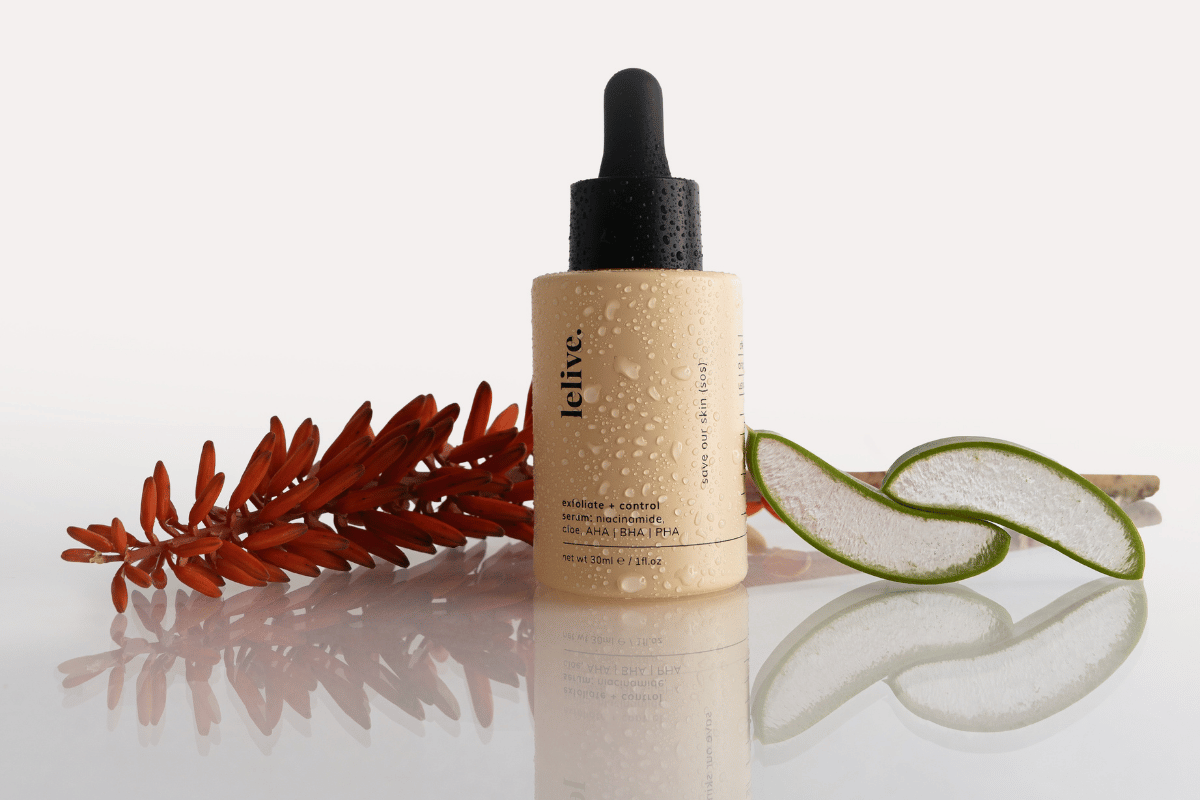
- Serum. All Glow'd Up in the morning for niacinamide, vitamin C and bakuchiol together. Save Our Skin at night if congestion and texture are the priority.
- Seal. The Du-Pont carries niacinamide plus squalane, shea butter and hyaluronic acid — it locks in the layer below while continuing to signal ceramide production.
Give it eight to twelve weeks. Niacinamide changes how your skin behaves rather than delivering an overnight result, and barrier repair runs on your skin's turnover cycle, not your patience.
Shop all our products with niacinamide here: https://leliveafrica.com/collections/niacinamide
Comments