
 ZAR (R)
 GBP (£)
 USD ($)
Best Products for Acne-Prone Skin in South Africa (2026 Guide)
Treating acne-prone skin in South Africa comes with a complication most international skincare advice ignores: on melanin-rich skin, the breakout is rarely the worst part. The dark mark it leaves behind can last six months or longer — and the harsher the product used to clear the breakout, the worse that mark tends to be.
This guide covers the best products for acne-prone skin available in South Africa in 2026, chosen specifically for their ability to clear congestion without triggering the inflammation that causes post-inflammatory hyperpigmentation.
Key Takeaways
- On melanin-rich skin, aggressive acne treatments often cause more visible damage than the acne itself — via post-inflammatory hyperpigmentation (PIH).
- Salicylic acid, niacinamide and gentle AHAs are the most effective barrier-safe actives for acne-prone South African skin.
- Consistency beats intensity. A gentle routine used daily outperforms a strong one used sporadically.
- Daily SPF is non-negotiable — UV exposure darkens post-acne marks and slows their fading significantly.
- Skipping moisturiser causes the skin to overproduce oil, which worsens congestion.
Why Acne-Prone Skin Needs a Different Approach in South Africa
The standard acne playbook — high-strength benzoyl peroxide, alcohol-based toners, aggressive scrubs — was developed for skin that doesn't pigment in response to inflammation. On deeper skin tones, that approach creates a second problem while solving the first.
Melanin-rich skin produces more pigment whenever it's irritated. So a routine that clears a breakout but leaves the skin red, tight and inflamed will frequently result in a dark mark that outlasts the original blemish by months. The visible outcome is worse, even though the acne itself improved.
The better approach is to treat gently and consistently. Low-concentration actives, barrier-supporting formulas, and no over-cleansing. It's slower in week one and significantly better by week twelve.
Best Ingredients for Acne-Prone Skin
Salicylic acid (BHA) — oil-soluble, so it penetrates into the pore to clear congestion at the source. At low concentrations it's suitable for daily use and doesn't strip the barrier.
Niacinamide — regulates oil production and calms inflammation at the same time. Uniquely useful for acne-prone melanin-rich skin because it addresses both the breakout and the pigment response.
AHAs (glycolic, lactic, mandelic) — accelerate cell turnover, which helps existing post-acne marks fade faster. Best used at night.
Vitamin C — brightens existing marks and provides antioxidant protection against UV damage that would otherwise darken them further.
Anti-inflammatory botanicals (turmeric, aloe, green tea) — interrupt the inflammation-to-pigment cycle that drives PIH.
Best Products for Acne-Prone Skin in South Africa
1. Best Overall Routine: lelive Best-Selling 3-Step Routine | Clarify, Brighten + Glow
R789 | Available at leliveafrica.com (on sale)
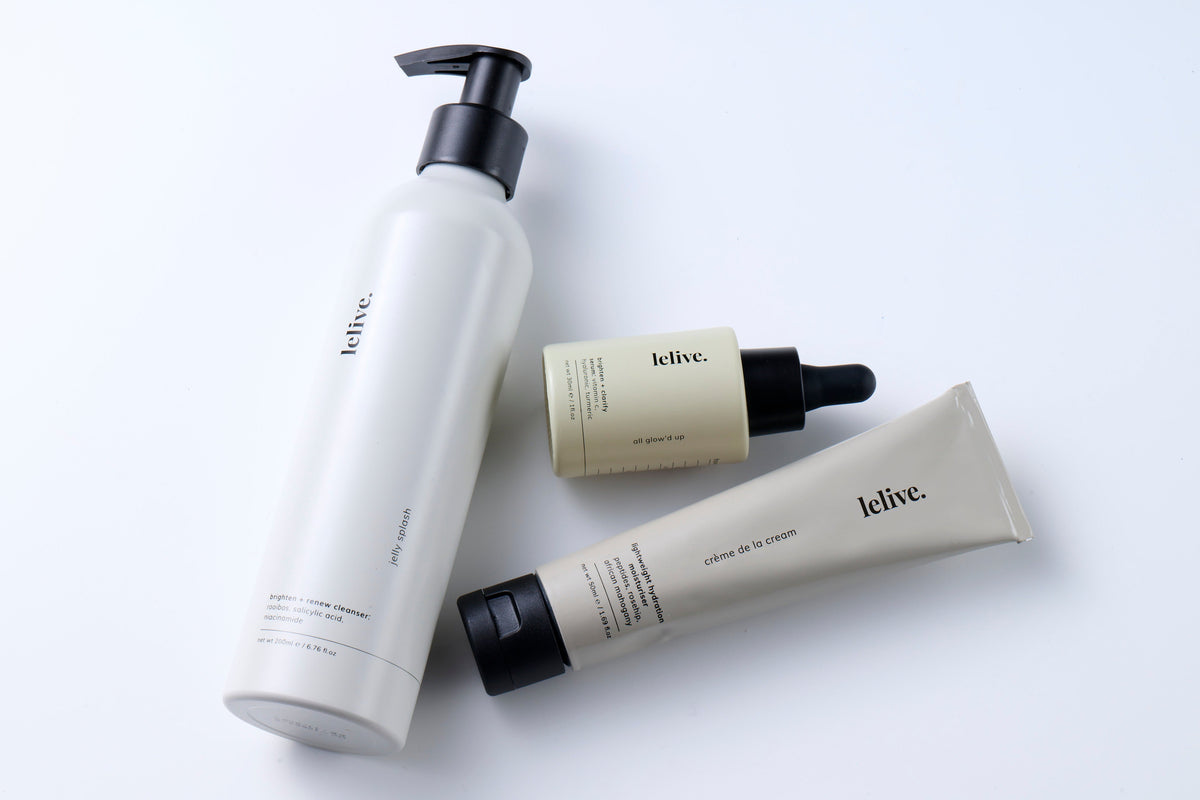
For acne-prone skin, the biggest mistake is usually the routine rather than any single product — too many actives, too much cleansing, inconsistent application. This three-step set removes the guesswork: Jelly Splash cleanser (AHA/BHA to clear congestion), All Glow'd Up serum (vitamin C and turmeric to brighten marks and calm inflammation), and All the Shade SPF 30 to protect progress.
The set is built around the principle that matters most for melanin-rich acne-prone skin: clear the congestion, calm the inflammation, and protect against UV — without stripping. Nothing in the routine causes purging, and every product is safe for daily use.
Best for: anyone starting from scratch, acne-prone skin with post-breakout marks, those who've had bad results from aggressive acne products.
2. Best Targeted Treatment: lelive Save Our Skin (SOS) | Exfoliate + Control Serum
R319 | Available at leliveafrica.com
SOS combines AHA, BHA and PHA — three exfoliating acids at low, barrier-respecting concentrations. The BHA clears congestion inside the pore, the AHA accelerates turnover to fade existing marks, and the PHA (the gentlest of the three) provides surface exfoliation without irritation risk.
Aloe and peach extract balance the acid load, which is why it's tolerated by skin that reacts to single-acid formulas at higher strengths. Use it in the evening, starting at two to three times per week and building up as your skin adjusts.
Best for: congestion, blackheads, uneven texture, post-acne marks; oily and combination skin.
Pair with: a lightweight moisturiser to support the barrier while the acids work.
3. Best for Post-Acne Marks: lelive All Glow'd Up | Brighten + Clarify Serum
R319 | Available at leliveafrica.com
If dark marks are your main concern rather than active breakouts, this is the product to prioritise. All Glow'd Up combines stable vitamin C with turmeric — an anti-inflammatory botanical with centuries of use in pigmentation treatment — and hyaluronic acid for hydration.
What makes it particularly relevant for acne-prone skin is the dual action: the vitamin C fades existing marks while the turmeric reduces the inflammatory response that creates new ones. Over 400 five-star reviews, with most customers reporting visible improvement in dark marks within 6–8 weeks.
Best for: post-inflammatory hyperpigmentation, uneven tone from old breakouts, combination to oily skin.
4. Best Weekly Treatment: lelive Seatox | Detox + Clarify Mask
A weekly clay-based mask does what a daily cleanser can't — draws out deep congestion and absorbs excess oil without the daily stripping that causes rebound sebum production. Seatox uses marine algae and aloe, which means it clarifies without the tightness most clay masks leave behind.
Use once or twice weekly on congested areas, or as a full-face treatment. Particularly useful during hotter months when oil production increases.
Best for: oily and congested skin, weekly maintenance, T-zone congestion.
5. Best Pharmacy Option: La Roche-Posay Effaclar Duo+M
~R400–R500 | Available at Clicks, Dis-Chem, pharmacies
Effaclar Duo+M combines niacinamide, salicylic acid and LHA — a gentler derivative of salicylic acid — in a targeted treatment for active breakouts and the marks they leave behind.
Best for: targeted spot treatment, persistent breakouts, pharmacy availability in Clicks and Dischem.
How to Build an Acne-Prone Skincare Routine
Morning: gentle cleanser → brightening or niacinamide serum → lightweight moisturiser → SPF 30 or higher.
Evening: cleanser (double cleanse if you wore SPF or makeup) → treatment serum (AHA/BHA, 2–3x per week to start) → moisturiser.
Weekly: clarifying mask once or twice, on congested areas.
Don't over-cleanse. Twice daily is the maximum. More than that strips the barrier and triggers rebound oil production, which worsens congestion.
Introduce one active at a time. Adding three new products at once makes it impossible to identify what's working — and dramatically increases irritation risk.
Give it twelve weeks. Acne routines take 8–12 weeks to show meaningful results. Switching products every three weeks guarantees you'll never see any routine work.
Common Mistakes That Make Acne-Prone Skin Worse
Skipping moisturiser. Dehydrated skin overproduces oil to compensate. Skipping moisturiser in an attempt to reduce shine reliably produces more of it.
Using physical scrubs on active breakouts. Scrubbing inflamed skin spreads bacteria and increases inflammation — which directly increases post-inflammatory hyperpigmentation on melanin-rich skin.
Skipping SPF. UV exposure darkens post-acne marks significantly. Any brightening progress you make is undone daily without sun protection.
Treating every mark as acne. Many dark marks left after a breakout aren't scars — they're pigmentation, which fades with brightening actives. Treating them with more acne products doesn't help.
FAQs: Skincare for Acne-Prone Skin in South Africa
What is the best skincare routine for acne-prone skin in South Africa?
A simple three-step routine works best: a gentle cleanser with salicylic acid or AHA, a treatment serum with niacinamide or vitamin C, and a non-comedogenic SPF every morning. Avoid over-cleansing and layering multiple strong actives — both increase inflammation, which worsens post-acne marks on melanin-rich skin.
Why do my breakouts leave dark marks?
This is post-inflammatory hyperpigmentation (PIH). Melanin-rich skin produces more pigment in response to inflammation, so any breakout, ingrown hair or irritation can leave a dark mark that persists long after the blemish heals. Treating the inflammation gently rather than aggressively is the key to reducing PIH.
Should acne-prone skin use moisturiser?
Yes. Skipping moisturiser causes the skin to overproduce oil to compensate, which worsens congestion. Choose a lightweight, non-comedogenic formula and use it daily, morning and night.
Is salicylic acid safe to use every day?
At the low concentrations found in cleansers and gentle serums, yes. Higher-strength leave-on treatments are better used two to three times per week, particularly on skin prone to pigmenting.
How long does it take to clear acne-prone skin?
Most routines take 8–12 weeks to produce meaningful improvement. Post-acne marks take longer — typically 3–6 months to fade substantially, and longer without daily SPF.
Conclusion
The best products for acne-prone skin in South Africa aren't the strongest ones — they're the ones you can use consistently without triggering the inflammation that leaves marks behind. For melanin-rich skin especially, gentle and daily beats aggressive and occasional every time.
Start with one routine, commit to twelve weeks, and protect your progress with SPF every morning. Browse the full acne-prone skincare collection to find the right formulas for your skin.
Comments